
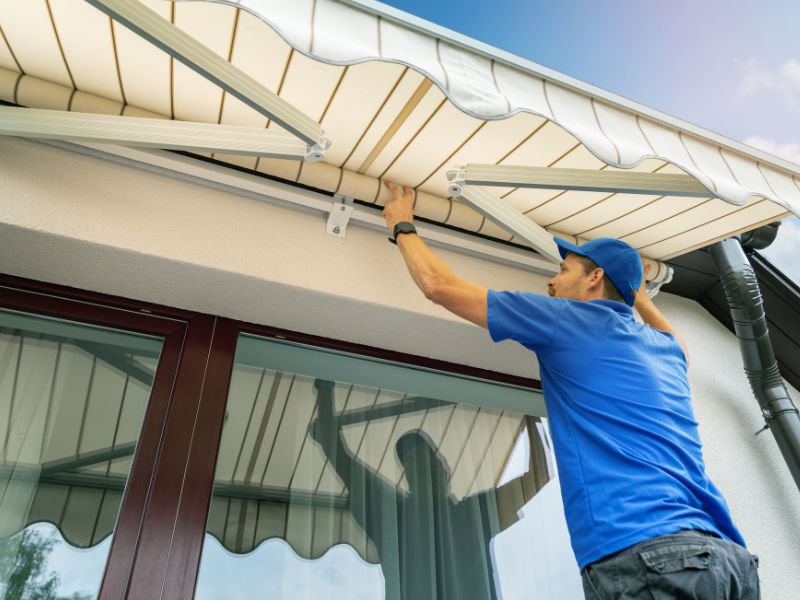
Many times the problem doesn’t appear suddenly, but builds up little by little. One day you notice the awning doesn’t retract as well, another day stains start to appear that won’t come off, or you see that the fabric has lost tension. These are small details that don’t seem important at first, but over time they start to show. And it’s almost always for the same reason: lack of maintenance or small oversights that build up without you noticing.
The importance of keeping awnings in good condition
An awning is constantly exposed to the sun, wind, rain and dirt in the environment. Even though it’s designed to withstand it, that doesn’t mean it doesn’t need care. If it’s not checked and cleaned from time to time, it’s normal for it to start deteriorating sooner than expected.
Keeping it in good condition is not just about appearance. A clean and well-maintained awning protects better from the sun, works more smoothly and prevents faults in the mechanism. It also extends its lifespan and delays the need to replace it, which is where you really notice the savings.
There is also an important safety aspect. An arm that isn’t properly adjusted or a structure with accumulated dirt can end up failing on a windy day. With basic maintenance, these problems are detected in time and bigger issues are avoided.
Awning care and maintenance
When it comes to caring for and maintaining awnings, there’s no need to do anything complicated. The key is consistency and not letting time pass when a small problem appears.
Regular cleaning without harsh products
Cleaning is the most basic thing and, at the same time, the most important. Dust, pollution or even leaves gradually build up on the fabric without you noticing.
It’s recommended to clean the awning several times a year with lukewarm water and a neutral soap. Avoid abrasive products and pressure washers, as they can damage the fabric or remove its waterproof properties. A soft brush or sponge is enough to remove dirt without damaging the material.
After cleaning, it’s important to let it dry completely before retracting it. Storing it while damp encourages the appearance of mold and bad odors.
Checking the structure and mechanism
The awning is not just the fabric. The arms, fixings and opening system also need attention. With use, it’s normal for some parts to loosen or lose adjustment.
From time to time, it’s advisable to check screws, supports and the overall condition of the structure. If you notice the awning moves more than usual or makes noises when opening, it’s a sign that something needs some kind of adjustment.
In the case of mechanisms, light lubrication on moving parts helps everything work more smoothly and prevents unnecessary wear.
Avoid using it in adverse conditions
One of the most common mistakes is leaving the awning open in strong winds or during storms. Even if it seems resistant, these situations significantly shorten its lifespan.
If the weather gets worse, it’s best to retract it. It’s also advisable not to let water accumulate when it rains, as the weight can deform the structure or damage the fabric.
These types of precautions are simple, but they make a big difference over time.
Relying on professionals when necessary
There are situations where cleaning or a basic adjustment isn’t enough. When the awning shows clear wear, problems with the motor or damage to the fabric, it’s best to turn to professionals.
At Toldos Express, we work directly with each case to offer solutions tailored to what each installation needs. We don’t just install, we also check, repair and advise so the awning stays in good condition for as long as possible.
We offer awnings in Marbella, Estepona and Sotogrande, adapting to what each client needs in their space. Our goal is that you don’t have to worry about maintenance beyond the basics, knowing that when needed, we’re there to help you quickly and clearly. Contact us.