
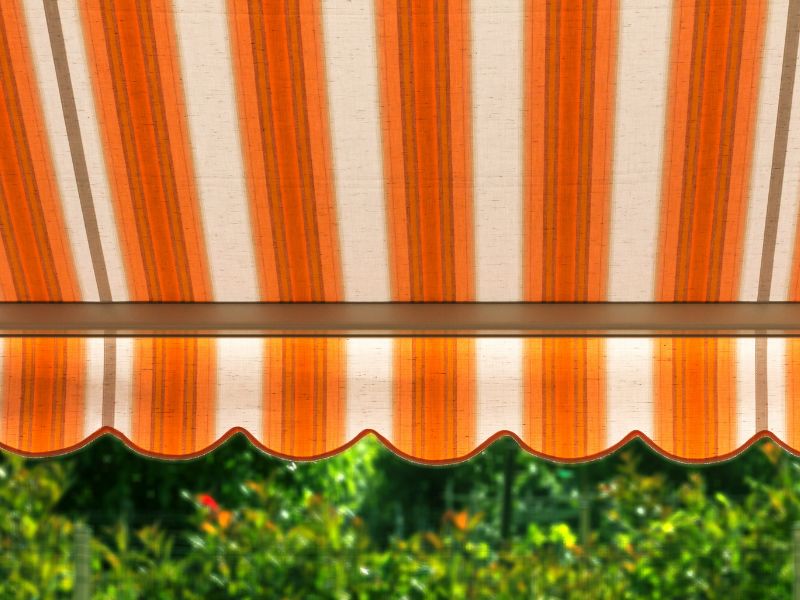
When good weather arrives and the sun beats down, protecting outdoor spaces becomes almost a necessity. An awning not only provides shade, it also helps reduce the feeling of heat and makes a terrace, balcony, or garden more pleasant.
But not all awnings protect equally: color plays a key role in reducing heat. Choosing it well can make the difference between a cool space and one that remains uncomfortable.
What color awning reduces heat the most?
Although sometimes the color is chosen just for aesthetics, the truth is that each shade responds differently to the sun. Some reflect light better, while others absorb more.
Light-colored awnings
Light colors, such as white, beige, cream, or sand, reflect sunlight the best. By reflecting much of the sun’s rays, they prevent heat from concentrating under the awning. This translates into a lower thermal sensation and a cooler environment.
They are a very common choice in sunny areas, as they help maintain a more controlled temperature during the hottest hours of the day. That said, they require a bit more maintenance, as dirt shows up more easily.
Dark-colored awnings
Dark colors, such as black, anthracite gray, or navy blue, absorb more heat. This means that, although they block direct light well, they can accumulate temperature on the fabric. Even so, many people choose them because they greatly reduce glare and create a more intense shade. In areas where the sun is strong but the heat is not extreme, they can be a good option, especially if a more modern style is desired.
Medium-colored awnings
Medium colors, such as green, brown, burgundy, or soft-toned stripes, offer a balance between aesthetics and thermal protection. They do not reflect as much as light colors nor absorb as much as dark ones.
They are a good solution for those who want an awning that reduces heat but also matches the facade or surroundings. In addition, they usually hide wear and dirt better over time.
Factors that influence the choice of awning color
Beyond the color itself, there are several aspects to consider before deciding. Choosing well from the start avoids mistakes and ensures a better experience.
- Orientation of the space: a south-facing balcony is not the same as a north-facing one. The more direct sunlight it receives, the more advisable it is to choose light colors.
- Climate of the area: in places with very hot summers, light tones help reduce accumulated heat more effectively.
- Use of the space: if the awning is used for eating, relaxing, or working outdoors, thermal comfort becomes even more important.
- Aesthetics of the home: the awning color should match the facade, walls, and overall style of the space.
- Maintenance: some colors require more cleaning than others, something to keep in mind in the long term.
Get the awning color that reduces heat the most
Choosing the right awning color is important, but having professionals to help you makes a difference. At Toldo Express, we study each case individually to offer the best solution according to the space, orientation, and real needs of each client.
So, if you are looking for awnings in Marbella, Estepona, and Sotogrande, our team can help you choose the color and type of awning that best protects against heat and fits your home or business. We take care of the entire process so you can simply enjoy a cooler and more comfortable space. Contact us.